The first group is the one who is given knowledge and wealth, and this is the one most desired by people (especially Muslims).
Bogor, West Java (Indonesia Window) – It is not about skin color, race, ethnicity, or ancestry, but rather concerns knowledge and wealth that form the basis for Islam's classification of people.
In a hadith narrated by Tirmidhi and Ahmad, Prophet Muhammad ﷺ (peace and blessings be upon him) said that "the world belongs to four groups."
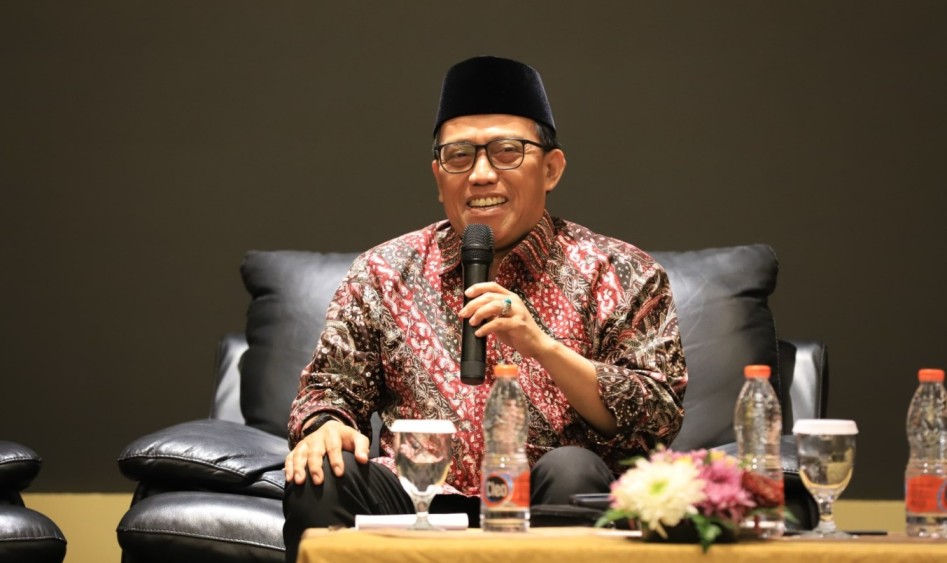
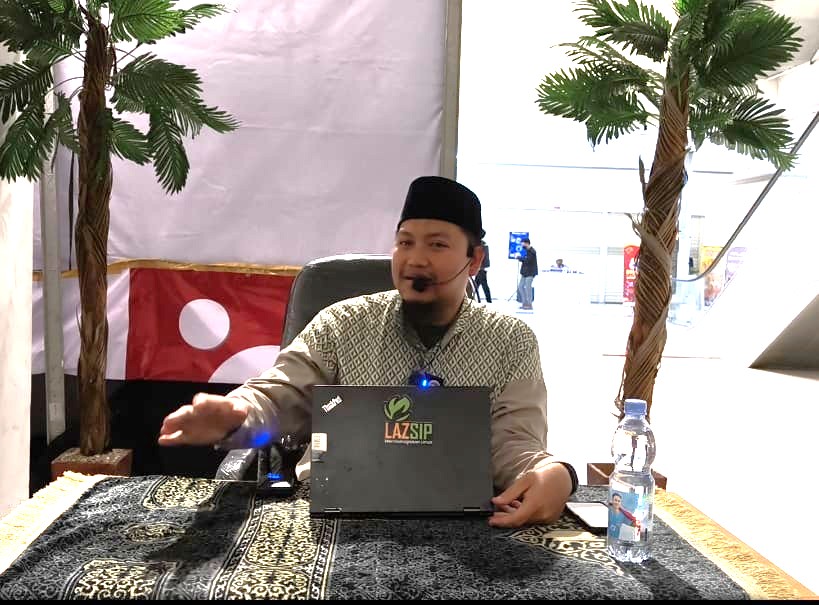
Shaikh Muhammad Irfandi, Lc. explained these four groups in a lecture entitled ‘Wealth that brings happiness vs. wealth that leads to misery,’ at the Weekend Berkah event at HalalVerse, Vivo Mall, Bogor district, West Java Province, Friday (Oct. 24).
The first group is the one who is given religious knowledge and wealth, and this is the one most desired by people (especially Muslims).
According to the hadith, the second group are those who are given religious knowledge but not wealth. "Based on his or her religious knowledge, he or she then says, 'If I were given what the first person was, I would do the same," Shaikh Irfandi said.
"If we have wealth, we must have religious knowledge as well. If we have both knowledge and wealth, then this is the best," Syaikh added.
Next is the third group: those whom Allah subhanahu wa ta’ala (ﷻ) has given only wealth but not knowledge. "So, in his ignorance, he spends all his wealth day and night, but only to disobey Allah (ﷻ). This is what the Prophet said," Shaikh pointed out.
"Such a person is strange, as he or she actually lacks knowledge but spends wealth carelessly. For such a person, the most valuable asset is to secure his or her fortune by educating the next generation to safeguard and develop his or her affluence," he said.
According to Shaikh Irfandi, if this asset—namely, their descendants, successors, or heirs—is not prepared with Islamic knowledge, the vast wealth might simply disappear.
"That's why sometimes rich people make their children like the ones of poor people," he said, adding that parents who implement this kind of education often tell their children to strive, not to rely on their parents' wealth, and to work hard if they want to earn money.
According to Shaikh Irfandi, even in worldly matters, if someone has wealth but lacks knowledge, they would ruin.
The fourth group is the one who is neither given wealth nor knowledge.
"This is the saddest thing. This person said that if I were given wealth like the third person, a wealthy person who sinned with his wealth, then I would also do what the third person did," Syaikh said.
The Prophet ﷺ said that the third and fourth groups of people are both in sin.
"Therefore, if someone does not have much wealth, then he must seek as much knowledge as possible," emphasized the Head of the Zakat Collection Institution (LAZ) Solidarity of Caring People (SIP), or locally known as Lembaga Amil Zakat (LAZ) Solidaritas Insan Peduli (SIP).
Shaikh Irfandi quoted the words of Imam Hasan Al Basri (may Allah have mercy on him), who said, "If you lose in worldly matters, then you must fight or win in efforts towards afterlife."
However, he continued, this does not mean you should not have fortune.
"A wealthy person who has no strong Islamic knowledge would tend to be manipulated by the trials of wealth, and would thus also lose in worldly trials," he explained.
Then, Shaikh Irfandi quoted the words of Allah ﷻ, which mean, ‘Indeed, humans were created complaining.’
"Therefore, mothers who often hear their husbands complain should be grateful. Because their husbands are still human, not genies. Conversely, if you have a nagging wives, be grateful to Allah ﷻ, it means your wives are a genuine human being," he said smilingly.
Another human trait mentioned by Allah ﷻ is that people tend to feel like they are the most disadvantaged on Earth when faced with adversity. Yet, there are many people who are in greater difficulty than they are.
"If we are tested with little wealth, an increasingly unstable business, or anything bad, we would draw closer to Allah ﷻ. But if we are tested with pleasures or abundant wealth, we tend to become stingier, further away from Allah ﷻ."
Therefore, the Shaikh continued, both good and adversity are tests of life that come from Allah ﷻ.
In
the Quran Surah Al-Fajr, Allah (ﷻ) says, "As for man, when God tests him or her and then glorifies him or her and gives him or her pleasure, then he or she says, "My God has glorified me." But if God tests him or her and limits his or her sustenance, then he or she says, "My God has belittled me."
"Well, in this matter of wealth, we understand that there are two types of wealth. There are treasures that make us happy, and there are treasures that lead us astray and plunge us into the hell of Allah ﷻ," Shaikh Irfandi pointed out.
He reminded that Prophet Muhammad ﷺ also said that true wealth is not measured by the amount of wealth, but by the richness of a person's heart.
"If the heart is rich, then wealth will only be a tool in the hands. But if the heart is poor, then wealth will rule over him or her, making him or her a prisoner of his or her own possessions. Therefore, devotees must be careful not to be enslaved by wealth," he added.
Shaikh Irfandi quoted Ibn Al-Qayyim (may Allah have mercy on him) in his book Al-Fawa'id, who said that wealth not used for obedience to Allah ﷻ will be a severe calamity. Conversely, for devotees, wealth is a means of leading closer to Allah ﷻ, by using it for good and welfare.
A very interesting example of this can be seen in the story of the companions of Prophet Muhammad ﷺ during
the Battle of Tabuk. At that time, the Muslim community was facing difficult times due to famine. The Prophet ﷺ ordered his companions to donate whatever they could.
Answering the Prophet's call, Umar ibn Khattab (may Allah be pleased with him) came with half of his wealth, intending to outdo Abu Bakr (may Allah be pleased with him) in alms.
When the Prophet ﷺ asked what he had left for his family, Umar replied that he had left half of his wealth.
Shortly thereafter, Abu Bakr Ash-Siddiq
radhiyallahu 'anhu arrived, and the Prophet ﷺ asked the same thing.
With full confidence, Abu Bakr answered, "I leave them with Allah and His Messenger." Such is the steadfastness of faith that demonstrates that true sustenance comes from Allah ﷻ, not from efforts alone.
After that, Uthman ibn Affan (may Allah be pleased with him) came and presented three hundred camels complete with war equipment.
Ibn Qayyim said that alms is like war, where it will reveal who is brave and who is cowardly. Those who dare to give charity in the path of Allah ﷻ have truly won the battle against lust and worldly desires.
In the context of modern life, Muslim entrepreneurs are also reminded to study the fiqh (Islamic jurisprudence) of buying and selling and the fiqh of transactions.
According to Syaikh Irfandi, Umar ibn Khattab (may Allah be pleased with him) once said, "No one is allowed to trade in our markets except someone who understands the religion, so that he knows what is halal (lawful in Islam) and what is haram (forbidden in Islam), what is a valid contract and what is invalid one."
With Islamic knowledge, a businessman will be able to protect himself from unlawful wealth and understand the boundaries set by Allah ﷻ in transactions.
When Allah ﷻ bestows abundant wealth, the most important form of gratitude is to increase his or her almsgiving and charity in His path.
One should never feel that the wealth he or she possesses is solely the result of his or her hard work, but rather due to his cleverness in financial management, business acumen, or intelligence.
Such an attitude resembles Qarun, who arrogantly said that he obtained his wealth because of his own knowledge. Because of that arrogance, Allah drowned Qarun and his wealth into the earth, and no one could help him.
From this story and advice, we learn that wealth is a trust and a test from Allah ﷻ. A true Muslim entrepreneur is not one who pursues unlimited wealth, but one who seeks to obtain wealth that is halal and full of blessings.
He or she must understand that true wealth does not lie in piles of wealth, but in an open heart, which is always grateful, sincere and close to Allah ﷻ.
Reporting by Indonesia Window



.jpg)